Article

Home health nursing sits at a crossroads. The U.S. home healthcare services market is projected to grow from $107 billion in 2025 to over $176 billion by 2032. Nine out of ten seniors prefer aging in their own homes over institutional care. And by 2025, one in six Americans will be 65 or older. The demand for skilled nursing care delivered in bedrooms has never been higher. Home health nurses already shoulder some of the heaviest administrative loads in the profession. They drive between patient homes, manage complex chronic conditions with limited on-site support, and then spend nearly half their working hours documenting what they did rather than doing more of it. Artificial intelligence is beginning to change this equation with practical, targeted tools that reduce paperwork and help patients stay engaged with their own care between visits. Understanding how AI applies specifically to their setting is now essential.
The Documentation Burden That's Breaking Home Health Nurses
Nurses spend roughly 40% of their shift performing documentation. For home health nurses, that percentage often runs higher. Every visit generates OASIS assessments, care plan updates, visit notes, medication reconciliation records, and coordination logs, all of which must meet federal compliance standards to support reimbursement.
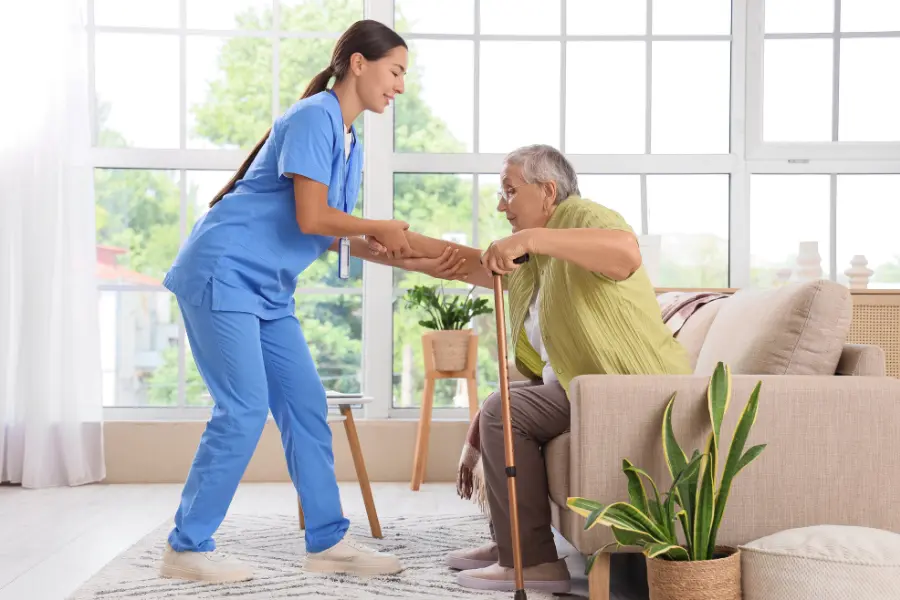
Unlike hospital nurses who document from a fixed workstation with IT support down the hall, home health nurses manage this workload from a laptop balanced on a patient's couch or the front seat of their car between visits. There is a clear relationship between documentation burden and clinician burnout syndrome. Home health compounds these challenges further, with nurses providing internet-based and home-based care facing additional stressors, including travel in unfamiliar environments and professional isolation, intensifying susceptibility to burnout.
Why Standard EHR Solutions Fall Short in Home Settings
Most electronic health record systems were designed for facility-based care. They assume stable WiFi, standardized workflows, and dedicated documentation time built into shift schedules. Home health breaks all three assumptions. Connectivity drops in rural areas. Every home presents a different clinical scenario. And the clock between patient visits leaves little margin for lengthy charting sessions. This gap between what EHR systems demand and what the home health environment allows is precisely where AI-powered documentation tools offer the most immediate relief.
AI-Powered Documentation: From 45 Minutes to Five
The most mature and rapidly adopted category of AI in home health is automated clinical documentation. These tools use natural language processing and ambient listening technology to convert clinician-patient conversations into structured, compliant clinical notes, without the nurse needing to type a word during the visit.
The workflow is straightforward, with the nurse beginning the visit with an AI documentation tool running on their phone or tablet. As they assess the patient, ask questions, and discuss the care plan, the system captures the conversation in real time. After the visit, the AI generates a draft note structured according to the agency's documentation standards, ready for the nurse to review, edit, and sign off.
AI-powered clinical documentation can reduce visit documentation time from 45 minutes to as little as 5 minutes, potentially unlocking 20 to 30 percent more clinical capacity per nurse. For a home health agency operating on thin margins with a stretched workforce, that translates to two or three additional patient visits per clinician per day.
Sully.ai is pushing this category forward with a team of specialized AI assistants designed for clinical workflows. Their AI Note Assist feature converts real-time patient conversations into structured, HIPAA-compliant documentation, achieving over 95% medical terminology recognition across more than 200 specialties. For home health agencies, the practical appeal is clear. Nurses spend less time typing and more time caring, while documentation completeness actually improves.
What to Look for in an AI Documentation Tool
Not every AI documentation product is built for home health. Agencies evaluating solutions should prioritize tools that work reliably on mobile devices with intermittent connectivity, support home health-specific assessment frameworks like OASIS, integrate with their existing EHR rather than requiring a parallel workflow, and maintain rigorous HIPAA compliance with human-in-the-loop review. The best implementations treat every AI-generated note as a draft until a clinician reviews and approves it — maintaining clinical accountability while eliminating the manual labor of initial documentation.
Remote Patient Monitoring: Moving from Data Capture to Predictive Intervention
Remote patient monitoring has long been used in home health, but AI is transforming it from a passive data-collection exercise into an active clinical intelligence system. Connected devices stream physiologic data from the patient's home to the care team. What's changed is what happens to that data once it arrives. Traditional RPM-generated alerts based on simple thresholds: blood pressure above 160 and blood glucose below 70. The result was a flood of notifications, many of them clinically insignificant, that overwhelmed nursing staff and buried genuinely concerning signals in noise. AI-powered RPM applies machine-learning algorithms to detect patterns and trends that precede clinical deterioration, flagging only the situations that warrant intervention. The clinical evidence supports this approach. Healthcare organizations implementing AI-based predictive analytics for readmission risk saw measurable reductions in 30-day readmission rates.
One of the most practical benefits of AI in RPM is reducing alert fatigue. By learning each patient's individual patterns rather than relying on population-level thresholds, AI systems dramatically cut false positives. A nurse managing a panel of 30 home health patients no longer needs to triage dozens of threshold-breach alerts each morning. Instead, the system surfaces the three or four patients whose data suggest a genuine change in clinical status, complete with context about what's different and why it matters.
Patient Engagement That Works Beyond the Visit
Home health nursing has always faced a fundamental challenge: the nurse leaves, and the patient is on their own until the next visit. For elderly patients managing multiple chronic conditions, those between-visit hours and days are when medication gets skipped, symptoms go unreported, and small problems escalate into emergencies.
AI is creating new touchpoints that fill these gaps without requiring additional staff time. AI-powered voice assistants can check in with patients daily, ask about symptoms, remind them about medications, and escalate concerning responses to the care team. For elderly patients who find smartphone apps difficult to navigate, voice-based interfaces offer a more accessible and less intimidating mode of engagement.
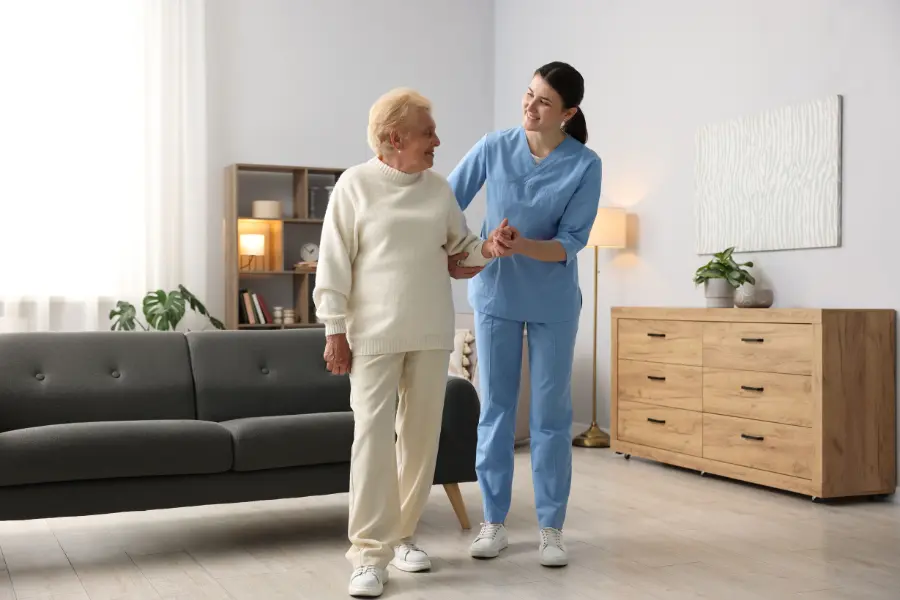
Smart medication management systems represent another practical application. AI-enabled pillboxes track medication adherence in real time, send reminders for missed doses, and alert caregivers or nurses when patterns suggest a patient is falling off their regimen. More sophisticated systems analyze medication histories to flag potential drug interactions, particularly valuable for home health patients who often see multiple specialists and manage complex medication lists without the safety net of a hospital pharmacist.
The 2026 Regulatory Tailwind: CMS Opens the Door
For home health agencies evaluating the business case for AI-enabled remote monitoring, the 2026 Medicare Physician Fee Schedule delivers a significant policy tailwind. CMS finalized new CPT codes that fundamentally change the economics of remote patient monitoring by recognizing shorter monitoring durations and briefer clinical interactions. The most consequential change: a new RPM device supply code (CPT 99445) now allows billing when between 2 and 15 days of patient data have been transmitted in a 30-day period, matching the reimbursement rate of the existing code that required 16 or more days. This matters enormously for home health, where patients may have episodic monitoring needs that don't fit neatly into a continuous 16-day monitoring window.
A new 10-minute clinical management code (CPT 99470) further lowers the bar, providing reimbursement for brief but meaningful patient touchpoints. A home health nurse spending 10 minutes reviewing a patient's RPM data, adjusting the care plan, and coordinating with the physician can now bill for that interaction. Previously, management time below 20 minutes went uncompensated. For remote therapeutic monitoring, CMS adopted updated CPT codes (98979, 98984, and 98985) that make billing more practical for musculoskeletal and respiratory therapy monitoring, a common need among home health rehabilitation patients. Agencies that invest in AI-enabled RPM infrastructure can now generate revenue from a broader range of monitoring scenarios, making the return on investment substantially more favorable than under previous coding rules.
Building an AI-Ready Home Health Practice
Adopting AI in home health is not an all-or-nothing proposition. The most successful implementations follow a phased approach, starting where the pain is greatest and the return is most immediate.
Start with documentation. For most home health agencies, AI-powered clinical documentation delivers the fastest, most tangible return. Nurses feel the difference immediately. Documentation time drops. Capacity increases. Burnout pressure eases. And the revenue impact from more complete, accurate documentation often covers the technology investment within months. Solutions that offer EHR integration, mobile-first design, and home health-specific templates should top the evaluation list.
Layer in remote monitoring. Once documentation workflows are stabilized, RPM is the natural next investment. Start with the highest-risk patients — those with congestive heart failure, COPD, or diabetes who account for the majority of preventable readmissions. Deploy connected devices with AI-powered analytics, train nurses on interpreting AI-generated risk scores, and build protocols for how flagged alerts translate into clinical action.
Expand patient engagement gradually. Voice-based check-ins and smart medication management can be introduced as comfort with the technology grows — both among clinical staff and patients. Pilot with patients who have family caregivers willing to support adoption, and build an evidence base within the agency before scaling.
Technology adoption fails without people's adoption. Home health agencies should invest in structured training that goes beyond using the software. Nurses need to understand what the AI is doing, what it's not doing, and where their clinical judgment remains essential. AI-based training modules can help, using interactive simulations and real-world case studies to build data interpretation skills. AI handles administrative tasks so you can focus on clinical work. That framing drives adoption far more effectively than mandates.
The individual threads of AI documentation, remote monitoring, and patient engagement are beginning to converge into a more integrated whole. Virtual nursing models point toward a future where AI doesn't just assist with discrete tasks but orchestrates entire care workflows. Hospital-at-home programs, powered by AI triage engines and continuous remote monitoring, are expanding the acuity of patients who can safely receive care outside facility walls. Persistent nursing shortages, particularly in specialties and home-based care, make this technological augmentation not merely convenient but necessary.

The global healthcare workforce shortfall projected at 10 million by 2030 makes the trajectory clear: there will not be enough human clinicians to meet demand through traditional staffing models alone. AI will not replace home health nurses. The relationship between a nurse and a patient in their own home cannot be automated. But AI can ensure that a nurse's limited hours are spent on tasks only a human can do, while technology handles the rest. For home health agencies, the question is no longer whether AI will reshape their operations. It's whether they will adopt it deliberately, with clinical rigor and strategic planning, or be forced to catch up as competitors, payers, and regulators move forward without them. What remains is the decision to begin.
Sources:
Fortune Business Insights — U.S. Home Healthcare Services Market Size
Healthcare IT News — AI Should Make RPM Scalable, Sustainable and Successful in 2026
PMC — Documentation Burden in Nursing and Its Role in Clinician Burnout Syndrome
Frontiers in Public Health — Job Burnout Among Online Nurses Delivering Internet+ Home Care Services
PMC — Embracing Artificial Intelligence: Revolutionizing Nursing Documentation for a Better Future
Sully.ai — AI Clinical Documentation: Complete Guide for Healthcare Organizations
INFORMS Journal on Applied Analytics — Reducing Hospital Readmission Risk Using Predictive Analytics
CMS — Calendar Year 2026 Home Health Prospective Payment System Final Rule
Medical Economics — Remote Patient Monitoring in 2026: New Rules from Medicare
JAMA Network Open — Nurse Burnout and Patient Safety, Satisfaction, and Quality of Care
PMC — Navigating the Future of AI Technologies for Improving the Care of Older Adults
AACN — Nursing Documentation Burden: A Critical Problem to Solve
HealthTech Magazine — How Remote Patient Monitoring and AI Personalize Care


Article

Keep reading

Article
/
How to Add an AI Receptionist to AdvancedMD, Where the Strategy Is to Stop the Phone Ringing
AdvancedMD's strategy is to stop the phone ringing, but patients still call. See what its texting covers, what it misses, and a one-week vendor evaluation.
Article
/
How to Add an AI Receptionist to NextGen and Why the Native AI Does Not Answer the Phone
The AWV is not a physical—Medicare prohibits billing both on the same day without a modifier. See what the visit must include, the fee, and worked examples.
Article
/
How to Add an AI Receptionist to eClinicalWorks and the 23 Percent That Still Reaches a Human
CCM requires 20 minutes of non-face-to-face time and a care plan—but the clock stops the moment the patient is in the room. See billing rules and examples.
